The operating system for how African trade actually works.
A comprehensive brief on OgaHQ — the product, the users, what's live, what's coming, and where we're going. Prepared for partners, investors, and advisors who have received the access token.
One page, so you can put the rest down.
OgaHQ is one system that runs the shop, keeps the books, and answers your customers — all from a WhatsApp message in whatever language the trader speaks. It replaces the notebook, the Excel sheet, the four bank apps, and the WhatsApp screenshots that traders currently use to run tens of millions of businesses across Africa.
The problem. 40M+ SMEs in Sub-Saharan Africa. Roughly 80% run on paper or memory. The existing tools — Sage, QuickBooks, Loyverse, Square — were built for Western retailers and never localised for how African trade actually works: multi-payment-mode reconciliation, WhatsApp as primary channel, offline reality, Pidgin voice notes.
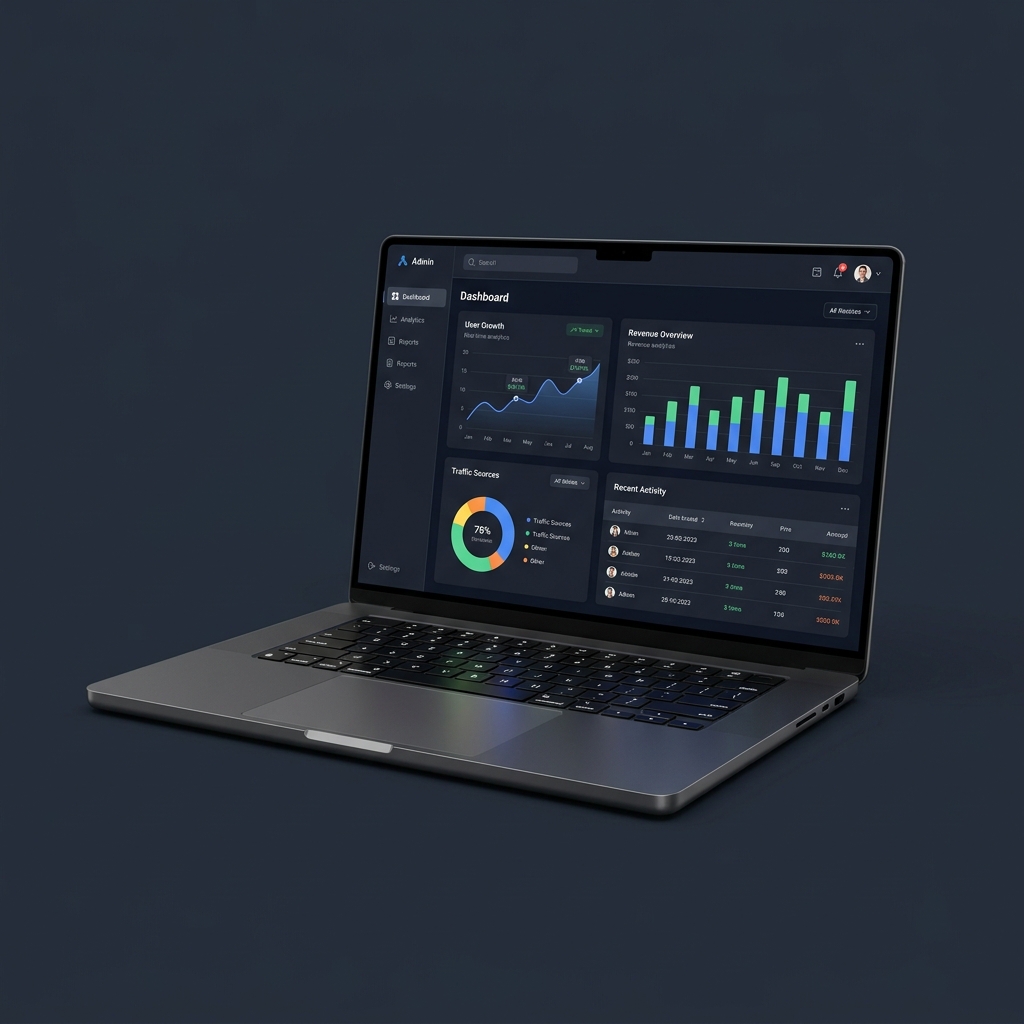
The product. Fifteen backend modules live in production, thirteen dashboard pages, running on Azure Container Apps under ogahq.app / api.ogahq.app today. POS, inventory, invoicing, double-entry accounting, CRM, expenses, purchasing, HR, e-commerce, analytics, and more — everything talks to everything else through one ledger.
The unlock. Two adjacent epics scoped and ready — OgaPay (sale-aware payment collection with auto-reconciliation) and WhatsApp interface (a two-sided WhatsApp surface where the trader operates the shop AND their customers place orders through the same phone number). Together these turn OgaHQ from a good tool into a category-defining OS.
The market. TAM ~$5B/year across Sub-Saharan Africa. SAM $500M. Realistic 3-year SOM: 10,000 businesses × $150/year = $1.5M ARR at ~80% gross margin. Pricing tiers from Starter (free) to Enterprise; core Business tier at $15/month.
The ask. $150,000–$300,000 seed. Enough to bring OgaPay + WhatsApp to production, land 500 pilot merchants across Lagos and one East African city, and prove the reconciliation-driven unit economics. Detail in §13.
African traders run real businesses on tools built for someone else.
Amara opens her cosmetics shop in Lagos at 8 AM. By 6 PM she has served 87 customers, sold 340 items, taken payments across cash, bank transfer, POS terminal, and mobile money — from four different bank apps. She extended credit to 12 customers she'll try to remember later. She recorded most of it in a notebook, some of it in her head, none of it into a system that talks back. By 9 PM, when she sits down to balance, the numbers won't agree.
The scale
Amara is not an edge case. She is the modal African retailer.
Why nothing has worked so far
Every category-leading option fails at the same thing: it demands the trader change to fit the software.
- The notebook. Cheap, universal, doesn't add up. Can be lost, stolen, or wet.
- Excel. Requires training. Doesn't work on phones. Nobody remembers to update it.
- Sage / QuickBooks / Xero. $50-100+/month. Built for Western accountants. English only, formal only, requires stable internet. Nothing to do with WhatsApp.
- Loyverse / Square. Better on POS but no accounting, no WhatsApp, no African payment rails, no offline story.
- WhatsApp alone. Familiar, but no structure, no memory beyond scroll, no reconciliation, no books. Screenshots are not receipts.
The existing tools work for the trader. OgaHQ works like the trader.
The wedge isn't building yet-another-POS. It's building the first system that speaks the actual working language of African retail: multi-modal (voice, text, photo, screenshot), multi-lingual (English, Pidgin, Yoruba, Igbo, Hausa), multi-payment-mode from day one, and offline-first because the internet is intermittent.
One system for the whole shop.
OgaHQ is a unified business operating system. Sales, stock, invoices, accounting, customers, expenses, suppliers, HR, e-commerce — every module talks to every other module. When a sale happens, stock decrements automatically, the accounting entry writes itself, the customer's balance updates, and the receipt goes to their WhatsApp. One motion, everything moves.
Guiding principles
Every design decision defers to these eight commitments. They are not marketing — they are the constraints we build against.
Offline first
The POS works without internet. Sales queue locally, sync when connectivity returns. Offline is the norm, not the exception.
WhatsApp native
Owners run their business by messaging a number. Web and mobile exist; WhatsApp is where the working actually happens.
AI as assistant, not authority
The AI proposes, the owner decides. AI never mutates business data directly. Every recommendation carries a confidence signal.
Financial integrity always
Double-entry accounting. Every transaction balanced. Financial data is sacred — audit log is append-only, retained seven years.
One platform, one truth
A sale is an accounting event, an inventory event, and a CRM event simultaneously. Modules are independent in code but share a single source of truth in data.
Affordable by design
Target businesses currently spend $0–50/month on software. Pricing tiers accommodate that reality, starting free.
Dignity in simplicity
Zero training. The 10-second rule: the most common actions complete in under ten seconds. Nothing that reads as condescension or reads as complexity.
Built for growth
A shopkeeper who starts on OgaHQ can grow to a multi-branch operation without changing systems. Extraction seams — for multi-branch, multi-tenant, or third-party embedding — are baked in from day one.
What's in the box
OgaHQ ships as fifteen interconnected business modules exposed through one dashboard, one WhatsApp interface (coming), and one mobile app (planned).
Every row in every OgaHQ table carries a tenant_id. Cross-tenant queries are impossible by construction. This is the base guarantee that makes multi-tenancy safe for financial data.
Five moments nobody else does.
None of these features is new on its own. Voice-in-language, invoice-with-QR-in-one-send, receipt vision, cross-channel WhatsApp — each exists somewhere. Nobody has assembled them into one product for African traders. That assembly is the whole thing.
Text. Voice. Photo. Screenshot.
Type in English. Voice-note in Pidgin, Yoruba, Igbo, or Hausa. Snap a picture of a receipt. Forward a bank-alert screenshot. Whatever the trader sends, OgaHQ reads it, records the transaction, and confirms — in the language the trader wrote in. "Two Coke, one bread, cash." · a receipt photo · a bank-alert screenshot — same result.
Your customers reach the same number.
When a shopper messages your OgaHQ WhatsApp, the agent responds on your behalf — checks stock in real time, quotes prices, drafts the invoice, sends payment details. You see the confirmed order when you have a moment. Your shop keeps working while you're busy, on a break, or asleep. "Do you have Peak Milk?" → "12 tins, ₦2,500 each" → invoice sent → paid.
The invoice that pays itself.
Send an invoice via WhatsApp — the PDF, the payment QR code, and the bank account plus reference, all in one message. When the customer pays, your books update. You hear a chime. PDF · QR · bank ref — one WhatsApp send.
Photo → product.
Take a photo of a new product with your phone. OgaHQ reads the pack, drafts the catalogue entry, and sends you back a barcode you can print and stick on the shelf. No typing. Snap → confirm → barcode returned.
Every payment, one ledger.
Cash, POS terminal, bank transfer, mobile money — every payment mode captured, every one reconciled against the sale that produced it. You will never wonder again who paid. No more "did Chidi pay?" moments.
Five people OgaHQ is built for.
Composite personas drawn from real merchant interviews across Nigeria, Ghana, and Kenya. Every design decision defers back to at least one of these. If a feature doesn't help one of them, we don't build it.
Amara opens her shop at 8 AM. Her customers WhatsApp her all day to check stock and ask prices. She takes payment across cash, transfer, and POS terminal — from four bank apps. She wants a dashboard that answers "how did my business do today?" in ten seconds and a system that her cashier can use without training.
- Fast POS that works when the internet drops
- Automatic accounting so her books balance every night
- WhatsApp answers to daily questions
Emeka moves fast-moving consumer goods to hundreds of small shops across Accra. He needs multi-branch stock visibility, credit tracking across dozens of buyers, and reconciliation of transfer payments landing in three different bank accounts.
- Multi-branch inventory (Phase 2)
- Credit and receivables at scale
- Payment reconciliation across accounts (OgaPay)
Fatima runs a salon booking model on top of retail (hair products, tools). She receives most payment via M-Pesa Till, needs to track stylist commission per service, and wants recurring booking reminders sent via WhatsApp.
- Mobile-money reconciliation (M-Pesa)
- Staff performance reporting
- Appointment reminders via WhatsApp
David runs the POS during peak hours. He has no accounting knowledge, doesn't want any, and needs the till interface to be idiot-proof. He must be able to void a sale (with owner approval), process a return, and hand back correct change. He operates whether the internet is up or not.
- Zero-training POS interface
- Offline reliability
- Role-limited access (cashier only)
Ngozi discovers small Nigerian shops on Instagram and messages them on WhatsApp. She wants to browse a catalogue, place an order, and pay without leaving WhatsApp. She never opens the merchant's website — but the merchant's website has to exist for her to trust them.
- WhatsApp-native shopping experience
- Trusted payment flow (bank transfer, card)
- Order tracking after purchase
Amara's Tuesday, on OgaHQ.
Same shop. Same 87 customers. Same 340 items sold. Same four payment types. What changes is what she has to do to keep up.
6:00 AM — Open
Amara unlocks the shop. Instead of a fresh notebook, she opens OgaHQ on her phone. Yesterday's totals are already balanced. She sees a summary: "₦285,000 in sales yesterday. Peak Milk is running low — 8 tins left." She reorders Peak Milk with three taps.
9:00 AM — Rush
Twenty customers in an hour. David runs the till on OgaHQ. Each sale takes three taps: pick items, pick payment mode, confirm. Amara isn't watching — she trusts the system to keep the books. The dashboard on her phone shows sales climbing in real time.
10:32 AM — A customer messages
Amaka, a repeat customer, WhatsApps the shop's number asking about a Dell laptop bag. OgaHQ answers in seconds: "Yes — Dell 15" bag, black. ₦8,500. 3 in stock." Amaka orders. OgaHQ generates an invoice with a payment QR and a bank reference and sends it in one message. Amaka pays. OgaHQ chimes on Amara's phone: "Payment received. ₦8,500 from Amaka Okonkwo. Books updated."
Amara didn't type a word.
12:00 PM — Supplier arrives
The Peak Milk delivery from the morning reorder arrives. Amara taps to receive stock. The PO auto-marks as received. Accounts payable updates. Cost basis for Peak Milk carries through to future gross-margin reports.
3:00 PM — "Did Chidi pay?"
The recurring question. Amara asks OgaHQ from her WhatsApp: "Did Chidi Nwosu pay for the wig I sold him Thursday?" Reply in seconds: "Chidi paid ₦18,000 via transfer at 2:14 PM Friday. Balance: ₦0." She doesn't need to open four bank apps anymore.
6:00 PM — Close
David logs out. OgaHQ prints Amara a one-page daily summary: revenue by payment mode, top-selling items, expenses, gross profit. Everything balanced. She takes it home to her partner as proof the shop is working.
9:00 PM — At home
She checks her phone. OgaHQ has already sent tomorrow's low-stock alerts, a WhatsApp reminder to two customers with outstanding invoices, and a scheduled Instagram post about the fresh delivery. Tomorrow she doesn't wonder if the numbers balance. She knows they do.
Amara used to spend ~2 hours per evening reconciling the day. OgaHQ compresses that to zero. That's 14 hours per week she now spends on her business instead of on catching up to her business.
This is running in production.
OgaHQ is not a deck. Fifteen backend modules are deployed to Azure Container Apps under ogahq.app and api.ogahq.app. Signup is open. The API exposes 81 REST routes; the dashboard has 13 fully-functional pages. This is what the pilot cohort will use.
The module inventory
| Module | What it does | Status |
|---|---|---|
| Authentication & RBAC | Register, login, refresh tokens, per-tenant roles & permissions, self-serve signup | Live |
| Point of Sale | Standard and rapid sale modes, invoice generation, receipt, shipping fee, void, returns | Live |
| Inventory | Products, stock movements, reserved stock, barcode generation (Code128/EAN-13) | Live |
| Accounting | Chart of accounts, double-entry journal, auto-posting from sales & expenses | Live |
| Invoicing | Create, edit, void, per-tenant invoice prefixes, PDF rendering | Live |
| Quotations | Draft, convert to invoice, quote → sale | Live |
| Purchasing | Suppliers, purchase orders, goods receipt, stock inflow | Live |
| Expenses | Categorised expenses, daily totals, auto-post to accounting | Live |
| CRM | Customers, tags, interactions, purchase history, shipping addresses | Live |
| Analytics & Reports | Sales by day/product/customer/staff, top items, gross profit, item sales report | Live |
| HR & Payroll | Employees, roles, payroll (shipped ahead of original roadmap) | Live |
| E-commerce (scaffold) | Product exposure for storefront; storefront UI in Phase 3 | Scaffolded |
| Settings | Company profile, logo, invoice prefix, currency, receipt customisation | Live |
| Audit log | Append-only trail of all mutations, per tenant | Live |
| Backup & export | CSV export endpoints for full data extraction | Live |
Not everything the vision doc calls "must-have MVP" is fully shipped. Offline POS (F-002) is the biggest outstanding gap — the PWA/service-worker layer isn't yet in place, so the POS today requires connectivity. Live payment gateway integration (Flutterwave, Stripe) is stubbed pending OgaPay landing. Both are the next major deliverables (see §07).
The two epics that make it category-defining.
Two adjacent capabilities are fully scoped and sequenced. Each has an approved epic, defined success metrics, and a concrete phased rollout. Together they turn OgaHQ from a good ops tool into the category-defining OS.
7.1 · OgaPay — sale-aware payment collection
Nigerian SMEs already have fast payment rails: NIP settles bank-to-bank in seconds. The pain is not that payments are slow. The pain is that payments don't talk to the books.
Standalone payment gateways move money. They do not know what the merchant is selling. OgaHQ already owns the sale, the inventory, and the accounting. Nobody who only does payments can copy this.
OgaPay is a thin payment-collection layer that ties every payment to the sale that produced it. QR code per sale, bank ref fallback, auto-reconciliation, audible chime on the trader's phone the moment money lands.
How it works
- Cashier confirms a sale on POS. OgaPay generates a payment intent (amount + reference) and shows a QR + bank details.
- Customer scans the QR with any bank app (or types the reference into a manual transfer).
- Payment lands. Partner (Paystack / Flutterwave) webhook fires within seconds.
- OgaPay marks the sale paid, posts the accounting entry, decrements stock, updates the customer ledger, and sends a WhatsApp receipt to the customer.
- The trader hears a chime on their phone: "Payment received, three thousand two hundred and fifty naira."
Non-goals (deliberate)
- No fund custody. Partner PSP holds the float; OgaHQ never touches customer money. This is the biggest compliance choice — no CBN licence required.
- No consumer wallet. Customers use their existing bank apps. No new app to install anywhere.
- No lending. The reconciliation stream builds toward working-capital credit later, but not this epic.
Success metrics (3 months post-launch)
Partners for v1: Paystack primary, Flutterwave secondary. Anchor/Providus for cheaper virtual accounts at higher volume.
7.2 · WhatsApp interface — the third first-class surface
African SMEs already live in WhatsApp. Their customers are there, their suppliers are there, their staff are there. Every other surface is a context switch. The WhatsApp epic makes WhatsApp the third surface after web and mobile — where the actual working happens.
Two-sided by design
The critical insight, and the reason nobody else has shipped this: the same phone number handles both sides.
Merchant side
The trader operates their shop by messaging OgaHQ: "Sold 3 loaves cash" → sale recorded. "Show me top customers this month" → list returned. "Invoice Amaka ₦15,000 for laptop repair" → PDF + QR + bank ref sent to Amaka.
Customer side
Customers message the same number to enquire. OgaHQ answers on the merchant's behalf — checks stock, quotes prices, generates invoices, sends payment details. Merchant sees the confirmed order when free. Shop keeps working while merchant is busy, on a break, or asleep.
What makes this work (technically)
- Multi-modal. Text, voice notes, photos, screenshots, documents — all understood. Voice-to-text via Whisper (English + Pidgin v1; Yoruba/Igbo/Hausa on roadmap). Photo-to-product via Gemini vision.
- RBAC at the tool layer. The LLM cannot bypass permissions by pretending to be a different user. Every tool call carries a signed context; the MCP layer validates the signature before dispatch.
- Idempotency by design. WhatsApp message IDs become idempotency keys. A retried delivery never double-posts.
- Confirmation for destructive actions. Voids, refunds, large payments — all require a nonce reply ("Reply VOID-4231 to confirm"). Prevents accidental "yes" from clearing a guard.
- Audit trail. Every state transition (agent-initiated or otherwise) writes an immutable audit entry with WhatsApp identity as actor.
Sequencing
WhatsApp is intentionally sequenced after OgaPay. The most-asked WhatsApp queries — "how much today?", "who owes me?", "did Tunde pay?" — are only truthful once payments auto-reconcile. Ship OgaPay first, then the WhatsApp assistant has something honest to say.
7.3 · Growth surfaces
Once the operational core is complete (POS + accounting + payments + WhatsApp), two adjacent surfaces expand OgaHQ into a full commercial OS.
E-commerce storefront
A storefront for your shop, live in a day. Every product in your OgaHQ catalogue shows up automatically. Customers browse, order, and pay through the same payment infrastructure — orders landing right back in your order book, alongside the ones from the shop floor.
Social media manager
Take a photo of a product. OgaHQ writes the caption in your brand voice, generates hashtags, and schedules the post to Instagram, Facebook, TikTok, and X. Engagement flows back into your dashboard so you can see what your customers actually respond to.
Combined with OgaPay's reconciliation data, cash-flow signal at the shop level becomes real. That data is the foundation for working-capital credit to merchants based on their actual cash flow — a much better underwriting signal than anything the incumbent lenders currently see. Lending isn't part of any current epic; it's the option value we're preserving.
Where we are, where we're going.
Four phases over 24 months. Phase 1 is substantially shipped. Phase 2 has HR + payroll (ahead of schedule) and multi-branch still to come. Phases 3-4 remain conditional on funding and traction.
Core Operations · MVP
The core operational stack. Live in production. Missing pieces: offline POS (PWA), live payment gateway integration.
- POS, inventory, invoicing
- Double-entry accounting
- CRM, expenses, purchasing
- Analytics & reports
- Auth & RBAC
Operational Growth
HR/payroll shipped early. Multi-branch and marketing automation still to come. OgaPay lands here as an unblocking dependency.
- HR & payroll (shipped)
- OgaPay (payment reconciliation)
- Multi-branch
- Marketing automation
Digital Expansion
WhatsApp assistant launches, unlocking the two-sided interface. E-commerce storefront + social media manager complete the growth surface.
- WhatsApp interface + MCP
- E-commerce storefront
- Social media manager
- AI daily summaries
Advanced Intelligence
Computer vision for catalogue creation, workflow automation, potential lending rail, multi-currency, regional expansion beyond West Africa.
- AI marketing (caption gen, ad copy)
- Computer vision (photo → catalogue)
- Workflow automation builder
- Multi-currency, expanded regions
Named milestones
- M4 — MVP launch: 50 pilot businesses onboarded. Substantially achieved.
- M6 — Multi-branch + full HR live.
- M8 — 500 active businesses. OgaPay live.
- M10 — WhatsApp assistant launch. E-commerce storefront.
- M14 — AI features live. 2,000 active businesses.
- M24 — 10,000 active businesses across 5 countries.
How it's built.
Modular monolith on FastAPI, deployed to Azure Container Apps. The monolith is a deliberate choice: it keeps the deployment story simple until traction justifies extracting individual modules, and every module already ships with clean router → service → repository boundaries so extraction is a rename, not a rebuild.
The stack
| Layer | Technology | Notes |
|---|---|---|
| Backend | FastAPI (Python 3.11) + async SQLAlchemy 2 + Pydantic v2 + Alembic | 15 modules in app/modules/ |
| Frontend | Next.js 15 App Router + Zustand + Zod + shadcn/ui | Server components by default |
| Database | PostgreSQL 16 (Azure Flexible Server) | Every row carries tenant_id |
| Cache / queue | Redis (deferred; app doesn't currently connect at runtime) | Managed Redis when a Redis-backed feature ships |
| Object store | Azure Blob Storage | Barcode SVGs, receipt PDFs, product photos |
| Secrets | Azure Key Vault | DATABASE_URL, JWT signing key, provider credentials |
| Compute | Azure Container Apps (South Africa North) | 2 apps: api + web, each on user-assigned managed identity |
| CI/CD | GitHub Actions | Push to main triggers build + deploy |
| IaC | OpenTofu / Terraform | Full infra reproducible from repo |
| Observability | Application Insights + Log Analytics + Opik (LLM tracing) | All emissions structured |
Backend module pattern
Every module follows the same shape. This is not decorative — it's the rule reviewers reject PRs against.
module_name/
  router.py       # FastAPI router — HTTP layer only
  service.py      # Business logic — no HTTP concerns
  repository.py   # DB queries — no business logic
  schemas.py      # Pydantic v2 request/response models
  models.py       # SQLAlchemy ORM models
Routers call services; services call repositories. Cross-module communication is service-import only — never direct DB access. All I/O async.
Multi-tenancy invariant
Every row in every table carries a tenant_id. No exceptions. The TenantMiddleware resolves the tenant per request from the JWT and pins it into the request state. Every query in the repository layer filters by tenant_id. Cross-tenant queries are impossible to write by accident because the base repository enforces the filter.
Design principles
- Offline-first for critical flows. POS must work without internet — sales queue locally (IndexedDB), sync when online. Conflict resolution is server-timestamp-wins, dedup by client-generated UUID.
- Financial integrity always. Double-entry accounting. Every transaction is balanced. Every mutation writes an audit-log entry (append-only, 7-year retention).
- African market focus. Mobile money, SMS, WhatsApp, low-bandwidth UX are first-class, not add-ons.
Financial data is sacred.
OgaHQ handles the primary financial records of tens of thousands of small businesses. The trust posture is not marketing — it's operational discipline enforced at the architecture level.
Regulatory coverage
Compliance regimes we design against, in priority order:
- Nigeria NDPA 2023 — Nigeria Data Protection Act. Registration within first 6 months of live operations.
- Kenya DPA 2019 — Kenya Data Protection Act. Registration during Kenya market entry.
- Ghana DPA 2012 — Ghana Data Protection Act. Applies from Ghana launch.
- EU GDPR / UK DPA 2018 — For diaspora customers and any EU/UK-based merchants.
- PCI-DSS — Delegated to Flutterwave / Stripe / Paystack via OgaPay; OgaHQ never handles raw card data.
Data retention
| Data class | Retention | Rationale |
|---|---|---|
| Financial transactions | 7 years | Tax and audit compliance |
| Customer PII | Relationship + 90 days | Merchant may need historical customer context |
| Audit log | Indefinite, immutable | Regulatory + dispute resolution |
| AI conversation history | 90 days | Debug + evaluation; strictly not used for training |
| Session tokens | 30 minutes | Security |
| Deleted tenant data | 90-day grace | Accidental deletion recovery, then hard-purge |
Ethical boundaries
- No cross-tenant data reuse. One tenant's data is never used to inform recommendations for another.
- No AI-driven credit or employment decisions without human approval.
- No predatory AI pricing recommendations. Suggested prices carry rationale; the owner always decides.
- No biometric processing without explicit consent and regulatory approval.
- No training on tenant data — contractual clause, table stakes for enterprise adoption.
Roles
Business owners are data controllers for their customer data; OgaHQ Platform is a data processor. This distinction is legal, but it becomes architectural — retention, PII handling, and export/delete APIs all defer to the merchant's authority over their customer records.
Nigeria NDPA registration + Kenya DPA registration within 6 months of pilot. SOC 2 Type I process initiated within 12 months. SOC 2 Type II target: month 18.
Big market. Believable unit economics.
Sub-Saharan Africa has ~50M SMEs. Most are informal, most already run on WhatsApp, most spend $0-50/month on software. OgaHQ enters at the affordable end and grows with each business.
Market sizing
Pricing
Free
- 50 transactions/day
- 100 products
- 1 user
- Basic POS + inventory
Standard
- Unlimited POS transactions
- 5,000 products
- 5 users
- Invoicing + CRM + e-commerce
- WhatsApp assistant
Growth
- Everything in Business
- Multi-branch
- Full accounting
- Social media manager
- 15 users
Custom
- Custom integrations
- Dedicated support
- SLAs
- Advanced compliance
Unit economics (target)
Target gross margin: 75–80%. Break-even projected at month 18. Revenue mix: 80% SaaS subscriptions, 15% payment processing margin (post-OgaPay), 5% AI add-ons.
Go-to-market
Three distribution channels, in order of expected effectiveness:
- Field Business Relationship Managers. Human trust wins in African markets. This is how Prokip and similar operators grow — face-to-face onboarding in the same market.
- WhatsApp referral programme. Merchants refer other merchants via WhatsApp. Once WhatsApp interface is live, sharing OgaHQ is a one-tap forward.
- Partnerships. Payment processors (Flutterwave, Paystack), telcos (MTN, Airtel), industry bodies (LCCI, chambers of commerce), the African Retail Academy.
Competitive landscape
| Competitor | Strength | What we do differently |
|---|---|---|
| Loyverse / Square | Solid POS UX | WhatsApp interface, African payment rails, offline+, integrated accounting |
| Sage / QuickBooks | Deep accounting | Built for African trader workflow; not a Western tool retrofit; affordable |
| Prokip | Nigerian POS + inventory | WhatsApp two-sided, accounting, e-commerce, all integrated |
| Wati / Gupshup | WhatsApp Business plumbing | Full business OS, not just messaging; MCP + agent for real business ops |
| Notebook + WhatsApp | Zero learning curve | Same interface (WhatsApp), same simplicity, but adds up |
Real infrastructure. Real code. Ready for merchants.
Everything below is verifiable — the URLs are live, the API responds, the code is on GitHub, the infrastructure is on Azure. This isn't runway to build; this is runway to acquire.
What's proven
- Full backend live. FastAPI + Postgres + Azure Container Apps running under api.ogahq.app. 15 modules, 81 REST routes, 184 automated tests.
- Full frontend live. Next.js 15 dashboard under ogahq.app. Self-serve signup open. 13 dashboard pages functional.
- CI/CD. GitHub Actions: push to main → build images → deploy to Azure. Deploy time ~9 minutes. Alembic migrations run on API startup.
- Custom domains + TLS. Managed DigiCert certificates on ogahq.app and api.ogahq.app via Azure Container Apps.
- Infrastructure-as-code. Full production stack reproducible from OpenTofu. Proven this month by a clean cross-subscription migration completed in under a working day.
- The pitch document already live at ara.ogahq.app.
What's next (30-day horizon)
- Pilot cohort recruitment — 10 traders in Balogun and Ikeja, mixed personas (retail cosmetics, provisions, boutique, salon).
- Ship OgaPay v1 (Paystack primary) — the reconciliation stream that makes all subsequent WhatsApp answers truthful.
- Ship offline PWA (service worker + IndexedDB + sync queue) — closes the biggest MVP gap.
- Meta WhatsApp Business Cloud API business verification — a long tail we need to start now for a Phase 3 WhatsApp launch.
What we're raising, why, and what it buys.
OgaHQ is not raising to build — the product is live. We're raising to land. The next twelve months turn a working system into a category winner in Lagos, Accra, and Nairobi.
The number
Use of funds
- ~40% product and engineering. Bring OgaPay to production. Ship WhatsApp interface Phase 1. Close the offline gap.
- ~30% market acquisition. Field Business Relationship Managers in Lagos and one East African city.
- ~15% infrastructure and compliance. Cloud, monitoring, SOC 2 Type I initiation, regulatory registrations.
- ~15% operational reserve. Legal, admin, unexpected.
Partnership modes (in addition to or instead of investment)
- African Retail Academy (or equivalent institution) — joint pilot cohort, co-authored curriculum, co-hosted regional workshops, strategic advisory board seat.
- Payment processor partnership — negotiated rates with Paystack or Flutterwave in exchange for volume commitments.
- Telco / bank partnership — bundled acquisition through MTN, Airtel, or a Tier-1 African bank's SME programme.
The standard for how African traders run their shops in 2030 will be set this decade.
Payments got their African moment: Flutterwave, Paystack, Chipper, MTN MoMo. Logistics is having its moment: Kobo360, Sendy, Lori Systems. HR-tech is having its moment: SeamlessHR, PaidHR. Retail operations — the layer where the money is actually counted — has no winner yet. There's a five-year window before someone claims it.
OgaHQ is built to be that someone. We have the software running today. We know the market intimately. We know what needs to ship next. The only variable is whether we get there first or watch someone else land here in twelve months.
If any of this resonates, let's talk. There is a Thursday somewhere in the next fortnight that fits both our calendars.
Signup: ogahq.app/register